
 by Tyler Whitcomb/photos by the author
During a recent conversation with a couple of fellow modelers, I was asked if I’ve run any special trains during my career as a locomotive engineer, and how is it different than running a regular train? Working for a Class I railroad, I was fortunate enough to have run military trains, manifest trains with special dimensional and/or high value loads, dedicated maintenance-of-way trains, and I even hostled an officer special into Seattle’s King Street Station. This brought us to the topic of enhancing operations on my N scale Tenino Western Railroad (see February 2020 RMC) and how to incorporate special moves and load restrictions into the mix. Similar to my own experience at work, these special trains are introduced into an operating session without any prior notice, adding another dimension of realism as well as a fun challenge for my operators.
Let’s look at some of the more common load restrictions that ply the rails. Let’s start with flatcars and gondolas, since they can be loaded with items like telephone poles, or excessively long structural loads, like steel beams. Loads that extend past the ends of a car require “idler” cars to help protect the load and prevent damage to the equipment. The load and idlers have to remain coupled together until they reach their final destination. If a load is shiftable, it usually has in-train placement restriction, such as not being allowed next to a locomotive, caboose, or any hazardous material cars. It may also have additional operating restrictions that pertain to it because of lineside structures, bridges, tunnels, curves, passing another train with a similar wide load, or sometimes an area that requires a reduced speed.
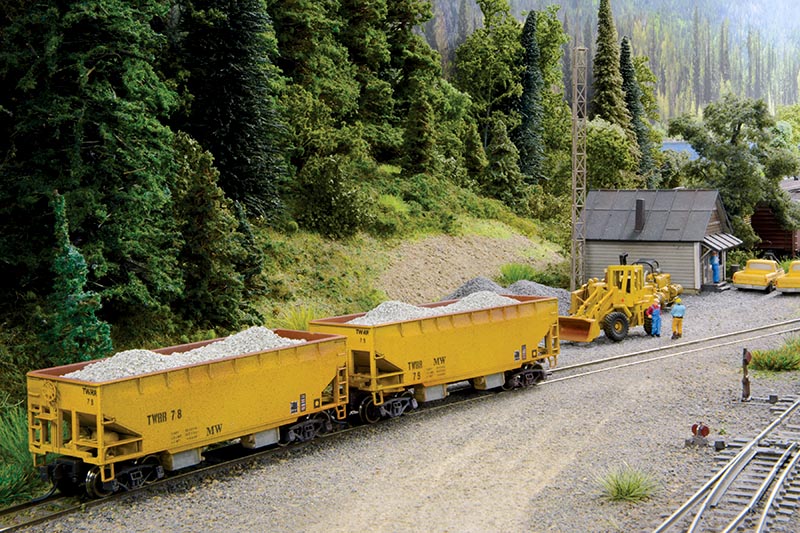
ABOVE: It’s quitting time for the MOW crew as the last two ballast cars are finally loaded and will eventually be added to the work train by a yard crew. Individually, these cars aren’t high priority, but in numbers they can impose speed restrictions. Ballast and rock trains are easy additions to most rosters since many modelers already own suitable cars and they can be run straight through or worked to simulate ballast-dumping along the line.
Another kind of special load is a high-value item like an electric transformer, aircraft fuselage, or windmill parts. Transformers are usually moved on special heavy-duty depressed-center flatcars or in specially designed Schnabel cars that can accommodate larger dimensional loads. This not only lowers the center of gravity but also allows additional vertical clearance.
Commonly you only see one or two transformers being transported at a time, but there are exceptions. Transformers and generators come in a variety of configurations and sizes, just like the cars that transport them. In-train placement restrictions are also usually associated with high-value loads, which require train crews to keep a careful eye on them, and excessive dimensional loads in general.
The loads are placed close enough to the head end to be viewed from the cab, but far enough back to not be damaged by locomotive exhaust, excessive train forces, or damage from a collision; no closer than the fifth car and no farther than the tenth, depending on a railroad’s policies and instructions. Depending on the size of the load it may also require special routing contingent on a rail line’s limitation, like lineside clearance restrictions, bridge weight, or even possibly rail size.
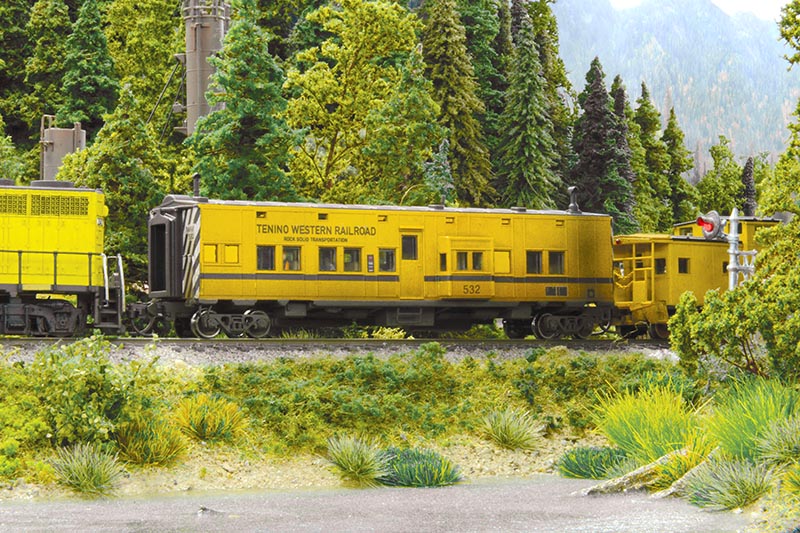
ABOVE: Sometimes a special train might consist of just a single car, as in the case of Tenino Western’s Rail Detection Car 532 checking for hidden defects. The car was converted from a surplus Army troop sleeper. The Federal Railway Association (FRA) and their rail detection cars still occasionally perform inspections like these, but most often this task has been contracted out to companies such as Sperry because of the specialized nature of the equipment involved.
Some high-value and excessive dimension loads also require dedicated personnel to travel along with the train. The crews usually ride in a modified caboose or passenger car for the long haul. In contemporary railroading, a neat dimensional and high-value load to witness are the Boeing aircraft cars, which haul 737 fuselages and sometimes wing assemblies between Wichita, Kan., and the assembly plant in Renton, Wash. These trains consist of numerous specially equipped flatcars and support equipment, usually in groups of six to eight aircraft.
Another load that was once fairly common throughout North America, and also had various restrictions placed on them, were log cars. When assembled into a train they generally were not allowed to pass another moving train (due to stray branches or shifting loads possibly striking an opposing train), and depending on the equipment — which was usually antiquated and dilapidated — there would be additional speed restrictions. The nature of these trains usually made them one of the lowest priority trains on the railroad. Operations on dedicated logging railroads differed greatly from those of the connecting railroads, but that doesn’t mean they didn’t occasionally traverse the main line on their way to the mills.
Also, let’s not forget maintenance-of-way (MOW) trains such as tie, rail, and ballast trains. Snowfighting and firefighting trains are more common on Western lines. Wreck recovery trains and “hospital” moves bringing retired equipment to their ultimate destination for scrapping are also common. Even a car loaded with maintenance-of-way equipment is an eye-catching load and can be a great conversation starter!
