
 by Kip Grant/photos by the author except as noted
In a recent opinion piece, Jason Shron lamented how few model railroads host passenger trains. Some layout owners seem to think you need extensive special facilities to run passenger service, but even the smallest railroads can incorporate the operational interest these trains provide.
It reminded me how much a simple passenger local adds to operations on my proto-freelanced Delaware & Hudson Sonnyvale Branch (featured in the April 2013 Railroad Model Craftsman). If your layout’s operating scheme allows even a little freelancing, it is something worth trying, no matter what era you model.
My layout is inspired by the six-mile D&H branch from Fort Edward to Glens Falls, N.Y. Although I model 1962 and passenger service on the branch ended in 1958, the freelance element allows me to recreate the daily morning train between the two communities. It adds a lot to our operating sessions.
Historic Inspiration
Passenger service began on the Glens Falls Branch on July 4, 1869. The inaugural run made 11 round trips between Fort Edward and Glens Falls. Because fares were waived, some enthusiastic celebrants packed lunches and rode all day. In 1882, service was extended another eight miles to Lake George, helping tourism blossom. During the summer months, a half-dozen or more trains, many with connections from Albany and New York City via the New York Central, carried vacationers to what the railroad advertised as “A Summer Paradise.”
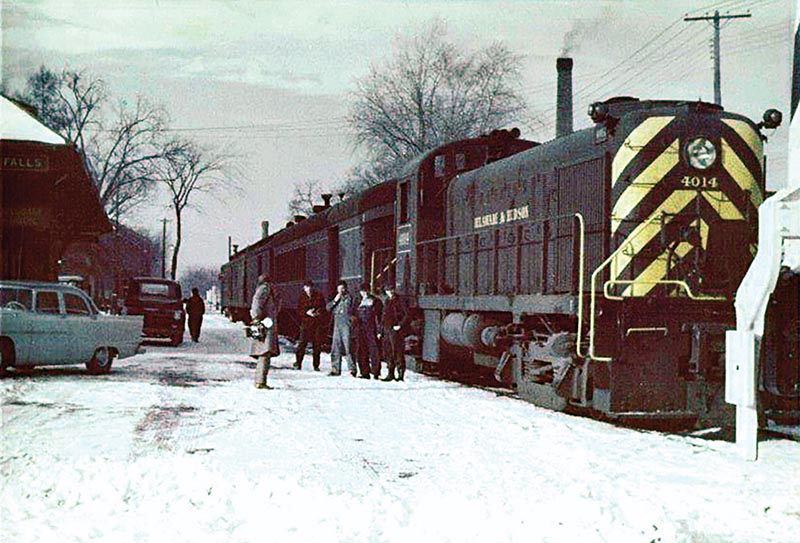
ABOVE: What’s believed to be the last train from Glens Falls, January 11, 1958. A newspaper photographer is on hand to mark the occasion. —Charles Clingman collection
Not to be overlooked was the year-round two- or three-car morning and afternoon local, which carried people traveling to shop or work in Glens Falls, or perhaps to spend a day at the beach. Until passenger service ended in 1957 to Lake George and in 1958 to Glens Falls, the daily local saw minor changes in consist and schedule. In general, though, it left Fort Edward around 8:00 a.m. for its first round trip and returned from its second trip in mid-afternoon. These branch line locals connected with main line trains at Fort Edward.
Interestingly, in the off-season, the afternoon train to Lake George was a deadhead move, carrying passengers southbound only. Also noteworthy, with only two or three freight cars billed to Lake George in an average week, the passenger local sometimes ran as a mixed train.
Typically, around 8:00 a.m., Train No. 1 from Albany arrived at Fort Edward and set off a combine, two or more baggage cars, and, in later years, a manned Railway Post Office car, which was also half baggage car. The RPO would spend the day at Lake George and return on the afternoon train. One baggage car was a storage mail car for Glens Falls, carrying pre-sorted mail, parcel post, and, as one retiree told me, “More Montgomery Ward catalogs than you could count.” Other baggage cars handled Railway Express service for Glens Falls and, during the summer tourist season, Lake George.
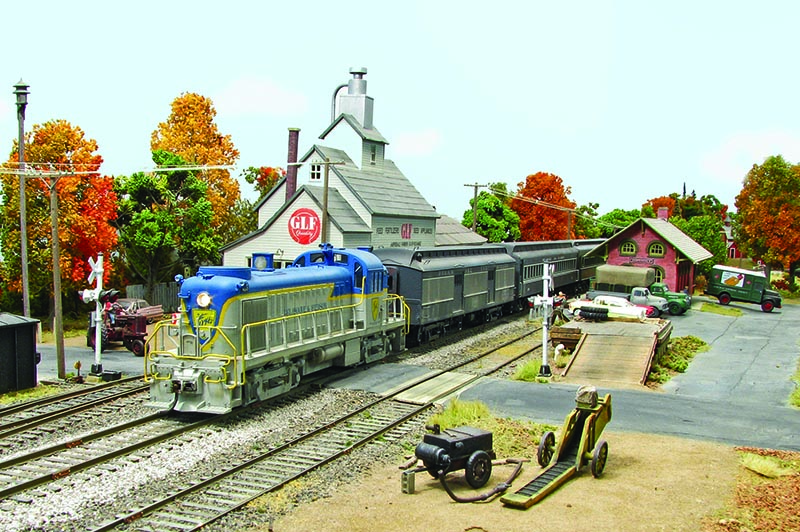
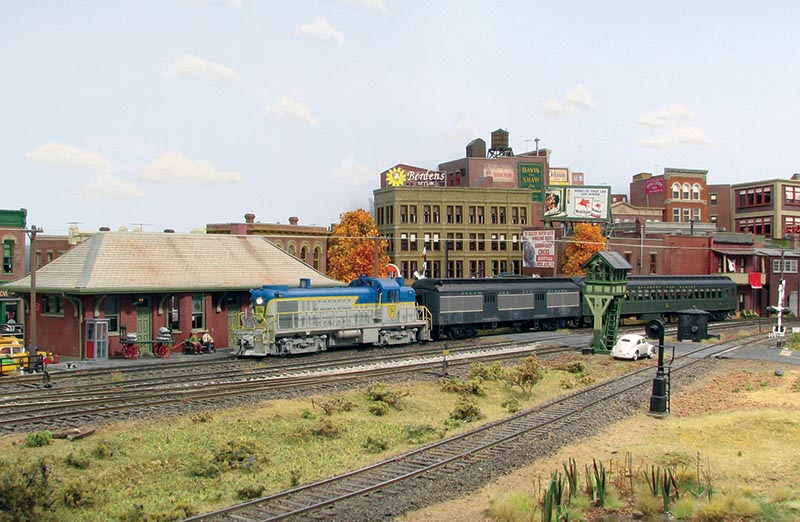
ABOVE: It’s just before 8:00am and Train 161 is making a brief stop at Jasperdale. Today, the train has an extra coach carrying young summer campers from Albany. They’ll be met by buses at Sonnyvale to continue their journey into the nearby Adirondacks.
You might wonder how such a small branch line train warranted a working RPO. To serve the lower Adirondack region, contract carriers met the train at Lake George and received sacks of mail sorted for towns and villages across the north country. At each post office, they collected outbound mail and returned it to the RPO clerks in time for the train’s mid-afternoon departure.
Train 161/162 on the Sonnyvale Branch
Do I have to have the passenger local on my layout? Of course not. But its presence adds to our operations and spices things up. Our two 7:00 a.m. yard jobs at Junction and Sonnyvale have to interact with the passenger train, which to me is a plus. I will say up front, however, that the retired freight railroaders in our small group do not usually see it that way, having never had to coexist with a passenger local. You see, it is a First Class train, which means they must be in the clear before it passes. Politely put, to them it is a pain in the neck — a nuisance that gums up their switching and use of the branch. For me, it is a fun operational challenge that adds variety to the session. They have gotten used to it, but I still hear about it!
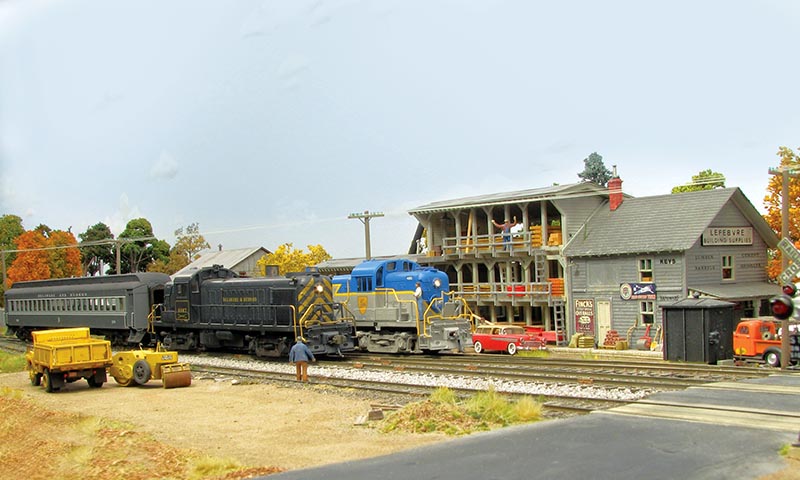
ABOVE: LEFT: Before picking up cars at Jasperdale, the Junction Yard job ducks into the Lefebvre Lumber spur to clear Train 162. The yard and passenger crews work these assignments regularly and meet here nearly every day.
We use a 2:1 fast clock to govern the passenger train, which appears on the move at 7:40 a.m., passing the yard at Junction, my stand-in for Fort Edward. The yard crew has a couple of chances to be out on the branch around then, so they need to keep an eye on the time. Passenger train operators are usually thoughtful enough to offer a gentle reminder if necessary. The real action takes place at Sonnyvale, which represents Glens Falls on my layout and is named for my dad, whose nickname was “Sonny.”
If you have staging areas on your layout, I am envious. I do not, so our passenger train appears from behind a group of coal silos, where it hides until called. It pops out as Train 161 and heads up the branch, pretending to have just departed the off-layout Junction depot…
