
 By Harry K. Wong
Unveiled with a distinctive semistreamlined roof line that reflected the bold automotive styling trends of the period, the 2,250hp Electro Motive GP30 was unlike any other locomotive before or since. Beginning in October 1961 and for the next eighteen months, 948 GP30s were built for 28 different railroads throughout the US and Canada. As these units reached their 20th birthdays, many GP30s were upgraded with new or remanufactured components and modernized systems to improve reliability and lengthen their useful lifespans. As we will see, the Santa Fe and the Burlington Northern railroads took different approaches in modernizing their respective fleets of GP30s.
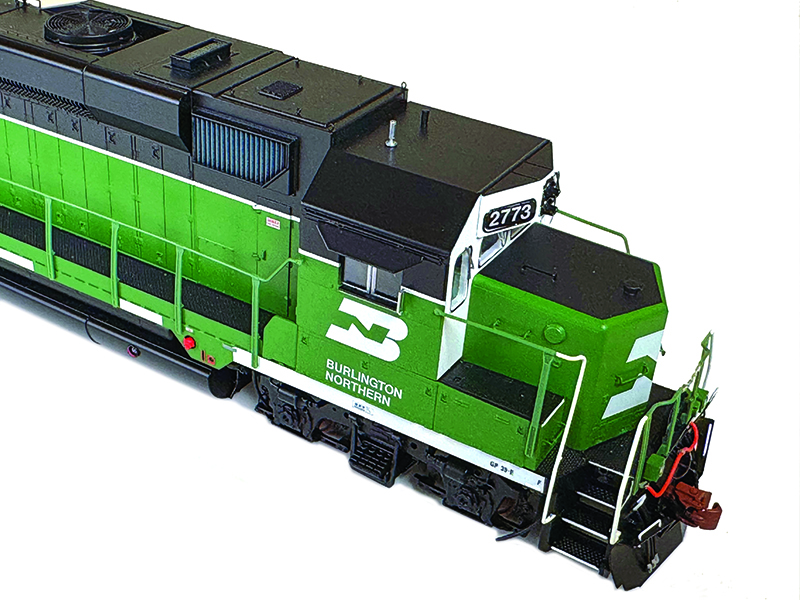
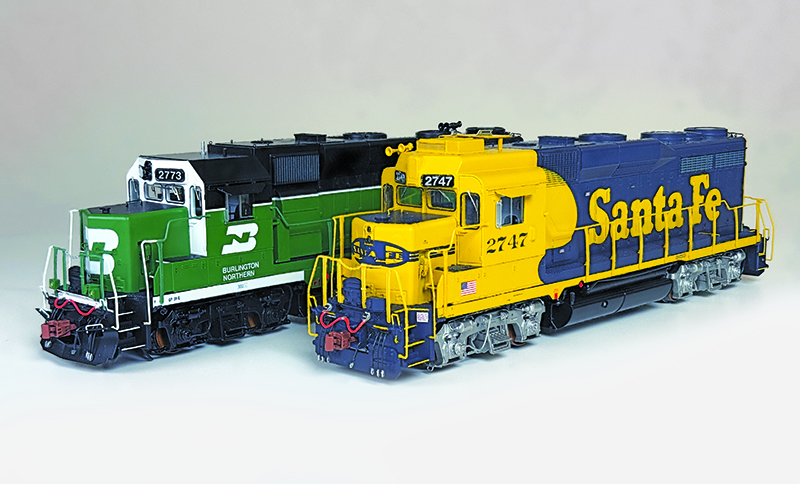
Offered for the first time in any scale are Santa Fe’s GP30us and Burlington Northern’s GP39Es. These are modernized GP30 variants from the latest production of HO scale EMD GP30 replicas from ScaleTrains. These highly detailed “Rivet Counter” models feature factory-applied .008-inch diameter wire grab irons, flexible handrails of POM plastic, Illuminated LED headlights and number boards, a detailed cab interior, correct fuel and retention tank arrangements per road, etched metal steps and rooftop cooling fans, road- and era-specific headlight and warning light arrangements, phase and road-specific modified body configurations, fully detailed pilots, underframes bristling with piping and conduits, flexible rubber sanding lines and much more. Assembly, lettering and paint quality was excellent on the models examined.
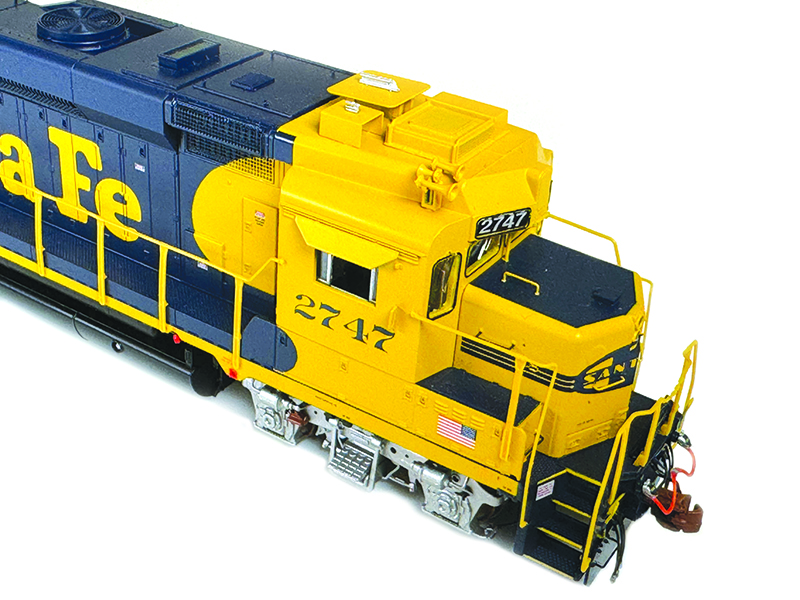
Santa Fe GP30u 2747
Beginning in 1980, the first of Santa Fe’s 86 upgraded GP30s emerged from its shops at San Bernardino, Calif. Rechristened as “GP30us”, externally visible modifications included a boxy air conditioning unit and antenna ground plane “table” mounted to the cab roof, finlike exhaust deflectors added to the roofline and shields installed over the inertial intakes behind the cab in an attempt to reduce the ingestion of exhaust particulates into the engine’s air filters. For ease of maintenance, the deflectors and shields were removed on most units by the late 1980s. Perhaps the most enduring feature on most of the GP30u fleet was the flattened front windshield area over the low nose replacing the vee-shaped windshield arrangement that these units were built with. Additional updates included the removal of the outermost brake clasps around each wheel and the installation of spare knuckle holders later to the trucks. Beginning in 1988, the front headlight was relocated to the low nose, followed by the removal of the rooftop-mounted Stratolite rotary beacon.
Given the precise combination of details and lettering on ScaleTrains’ model of ATSF 2747, this unit is replicated exactly as it appeared beginning in 1991 prior to the BNSF merger. To recap, each Rivet Counter series locomotive features details and artwork that are not only specific for a given era, but details and art that is specific to each road number for that era. The extreme attention to these details is furthered with the application of the correct safety slogan decals in the stepwells, unique lettering placement throughout and the American flags displayed on the battery box doors in support of Operation Desert Storm in 1991…