
 Story and Photo by Harry K. Wong
Over a period of two decades from 1940 to 1959, Denver & Rio Grande Western Railroad built 91 steel cabooses to replace its aging wooden caboose fleet. Numbered from 01400 to 01490, these cabooses were built in batches of about ten cars every few years at the railroad’s Burnham Shops in Denver. Most had riveted bodies, while the final 21 cabooses were welded. Outshopped with offset cupolas, wooden window sashes, and an arched roof, many of the cabooses were modernized first with single-paned windows, updated once more beginning in the mid-1950s with sealed Thermopane windows, and finally with side windows completely blanked out other than on the cupola during the early 1980s.
Now available from Rapido Trains are highly detailed lighted replicas of Denver & Rio Grande Western’s steel riveted cabooses with end cupolas. These cabooses are available in multiple versions and liveries addressing every modeling period from the 1940s to the late 1980s.
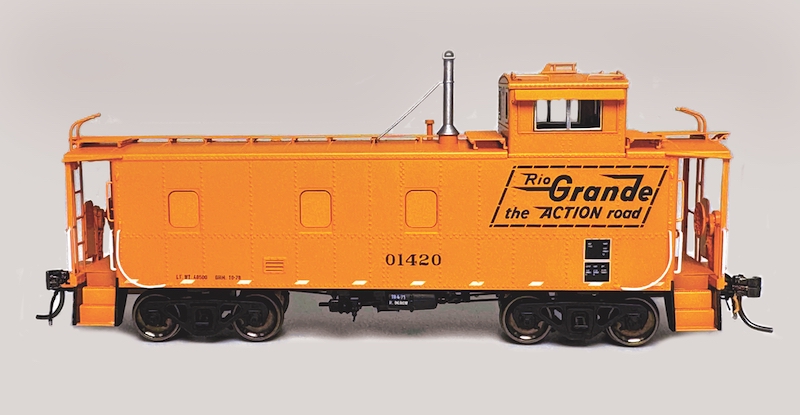
Each of these Rio Grande Riveted Cabooses comes with a full suite of finely executed details inside and out, beginning with separately applied wire grab irons, smokejack with wire support, see-through etched metal steps, etched metal Apex running boards, flush window glass and more. Underbody details include fully plumbed multilayer ABD brake rigging and details consistent with the Duryea cushioned underframe that the prototype cars were built with.
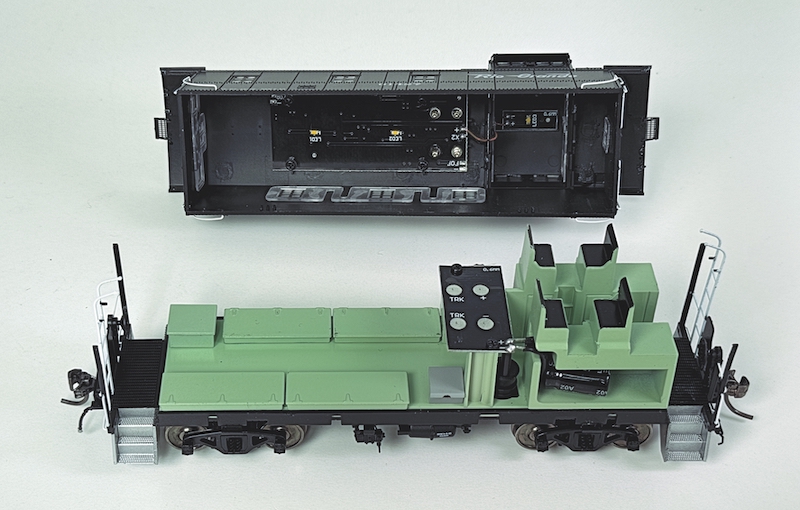
Inside the car is a fully painted multicolor interior dominated by an institutional shade of green, four black seats up in the cupola, and down below are crew bunks, a gray toolbox, a potbelly coal stove and even a white porcelain commode behind one of the walls!
A unique touch replicated for the first time on a scale model are the chromium-plated cast brass car numbers of these cabooses now replicated on an etched metal fret for the modeler to apply. Instead of alpha cyanoacrylate cement (ACC, or “super glue”), which could be problematic, we recommend using canopy glue to apply this final touch. It’s not mandatory, as the road numbers for each caboose are already printed onto the sides.
Four different body styles are offered for these cabooses: “As-built” (with four-pane window sashes), Early Mods, Post-War Mods (sealed windows) and “Late Mods” (blanked side windows). Liveries include black, “Switch Caboose” (black with orange cupola), single-stripe yellow and silver, and orange “Action Road” schemes where appropriate.
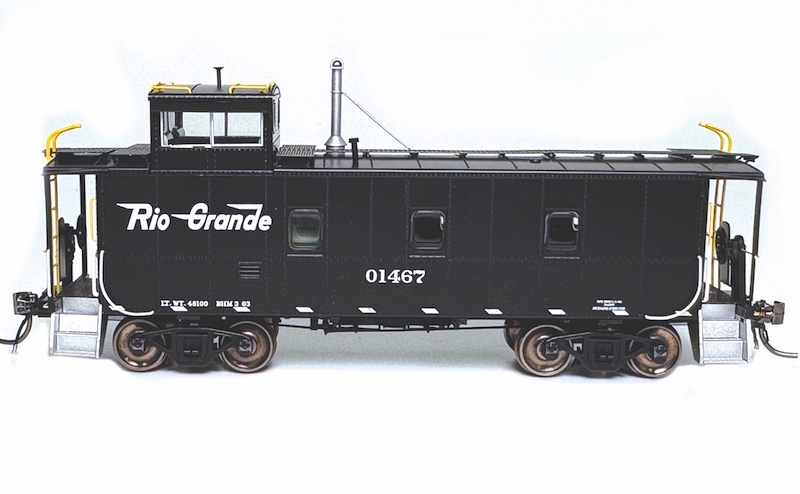
As-Built D&RGW 01427
Finished in black, our sample of Rio Grande 01427 represents its prototype built in June of 1942 with wooden four-pane window sashes, white ladders and white caboose grab irons. Our model also features end crossover platforms which were applied in June 1949 according to company records.
Through the 1950s, most of the fleet had their first round of in-service modifications including a nail-shaped radio antenna atop the cupola for the new radio onboard, new wide metal sash “Type I” sliding windows in the sides of the cupola, and single-pane wood sash side windows replacing the original four-pane windows. Rapido has replicated these changes in four “Early Mods” road numbers in this release, all finished in black. Two additional road numbers are also offered for the “As-built” cars to address the railroad’s “Switch Cabooses” notable for their orange cupolas, but without radio antennas per the prototype…